
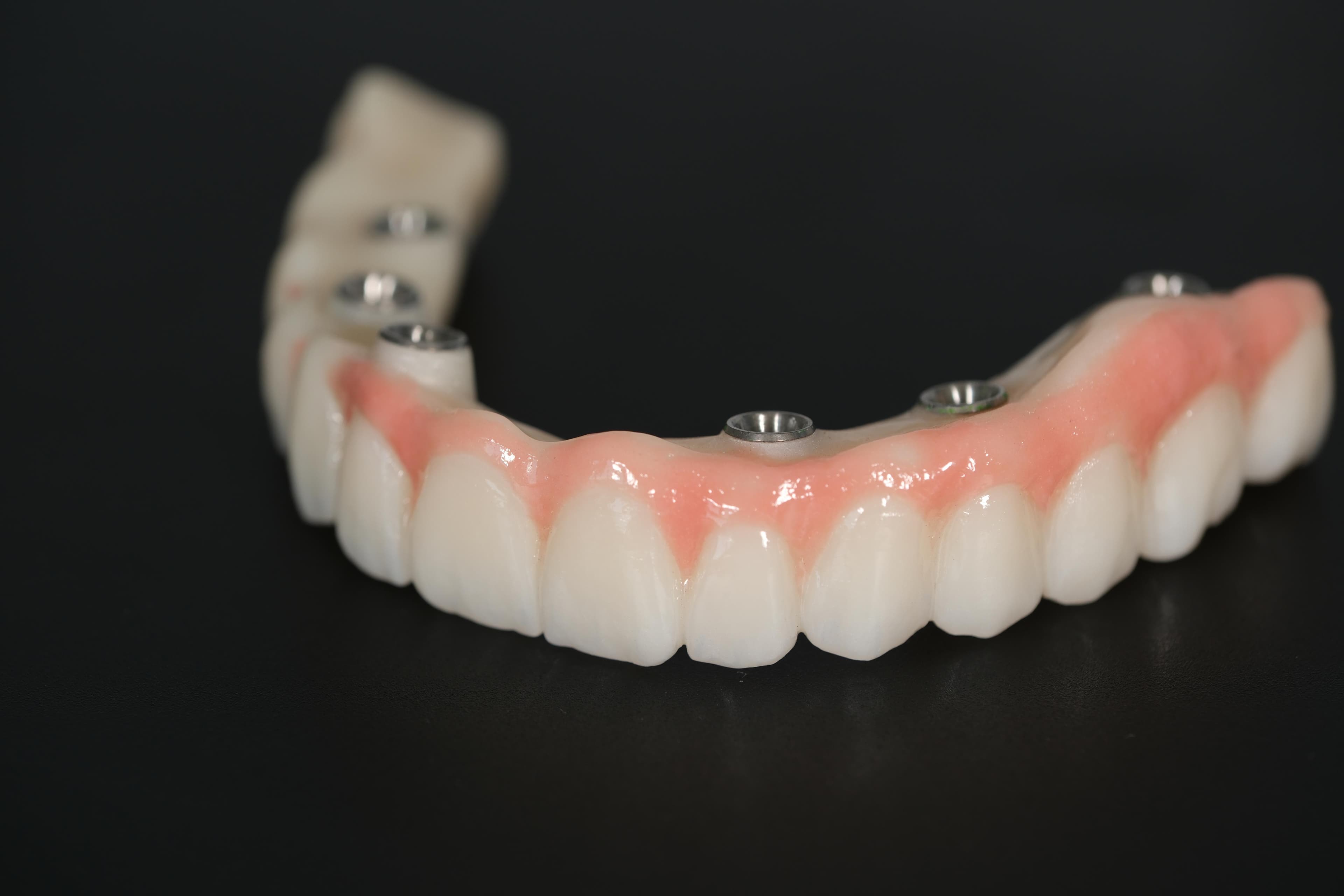
Prosthetic Treatments

Fixed and removable prosthetic solutions are applied to restore function and aesthetics in missing or damaged teeth.

Prosthetic Treatments

Crowns and Bridges

A dental crown is a full-coverage restoration that encases the entire visible portion of a tooth. Crowns are indicated when a tooth is severely decayed, cracked, or weakened after root canal treatment, or when an existing restoration has failed. At DentARF, we offer full-ceramic (e.max, zirconia) and zirconia-fused-to-porcelain crowns fabricated using CAD/CAM technology for precision fit and natural aesthetics.

A dental bridge replaces one or more missing teeth by anchoring a prosthetic tooth (pontic) to adjacent natural teeth or implants. Traditional bridges require preparation of the neighboring teeth to serve as abutments, while implant-supported bridges preserve adjacent healthy tooth structure entirely. Bridges restore chewing function, speech clarity, and facial contour while preventing the teeth adjacent to the gap from drifting.

The fabrication process involves precise digital impressions, shade matching, and a trial fitting before final cementation. Our patients receive detailed care instructions to maximize the lifespan of their restorations, which typically range from 10 to 15+ years with good oral hygiene.
Implant-Supported Prostheses

Implant-supported prostheses represent the gold standard in tooth replacement, combining the stability of osseointegrated implants with custom-made crowns, bridges, or overdentures. Unlike conventional dentures, implant-supported restorations do not rely on the gum ridge for support and therefore do not compress or resorb the underlying bone.

For patients with multiple missing teeth, implant-supported fixed bridges provide a permanent, non-removable solution. For edentulous (fully toothless) patients, All-on-4 or All-on-6 frameworks offer a complete set of fixed teeth supported by just four or six strategically placed implants, often delivered within a single day of surgery.

Implant-retained overdentures are a cost-effective hybrid option: a conventional denture that snaps onto 2–4 implant attachments for dramatically improved retention and stability. This option is particularly popular among older patients who have worn conventional dentures for years and find them increasingly loose and uncomfortable as bone continues to resorb.

Complete and Partial Dentures

Despite the growing prevalence of implant treatment, conventional removable dentures remain a viable and accessible option for many patients. At DentARF, complete and partial dentures are fabricated with high-impact acrylic resin and carefully selected artificial teeth for natural aesthetics and durability.

Complete dentures replace all teeth in an arch. They rely on suction, muscle control, and in some cases denture adhesive for retention. Modern complete dentures are customized through a multi-step process: primary and secondary impressions, jaw relationship records, try-in appointments, and final delivery — ensuring maximum fit and comfort.

Partial dentures restore function in patients who still have some natural teeth remaining. They may be cast metal-framed (for rigidity and longevity) or entirely acrylic (more economical). Metal clasps or precision attachments engage existing teeth to stabilize the prosthesis during chewing. We provide complete maintenance instructions and schedule regular follow-up appointments to adjust the fit as natural gum and bone changes occur over time.

Temporomandibular Joint (TMJ) Splints and Occlusal Guards

Prosthetic dentistry is not limited to replacing missing teeth — it also encompasses managing occlusal (bite) problems that affect jaw joint health and tooth longevity. Bruxism (teeth grinding) and TMJ dysfunction are increasingly common conditions that, if left untreated, lead to severe tooth wear, fracturing of restorations, and chronic jaw pain.

At DentARF, we fabricate custom-made occlusal splints from hard acrylic that are worn nightly (or during periods of high stress) to distribute bite forces evenly and protect tooth surfaces. Splint therapy also helps identify and correct occlusal interferences that contribute to TMJ loading.

For patients with active TMJ pain, we combine splint therapy with physiotherapy referrals, anti-inflammatory protocols, and in some cases Botox injections into the masseter muscles to reduce clenching force. These approaches, combined with restorative correction of the bite where needed, form an integrated treatment plan for long-term comfort and oral health.

DentARF Klinik

Take the First Step for a Healthier Smile Today

Use our online booking flow to create your appointment in 5 quick steps.

Book Appointment