
Digital Dentistry

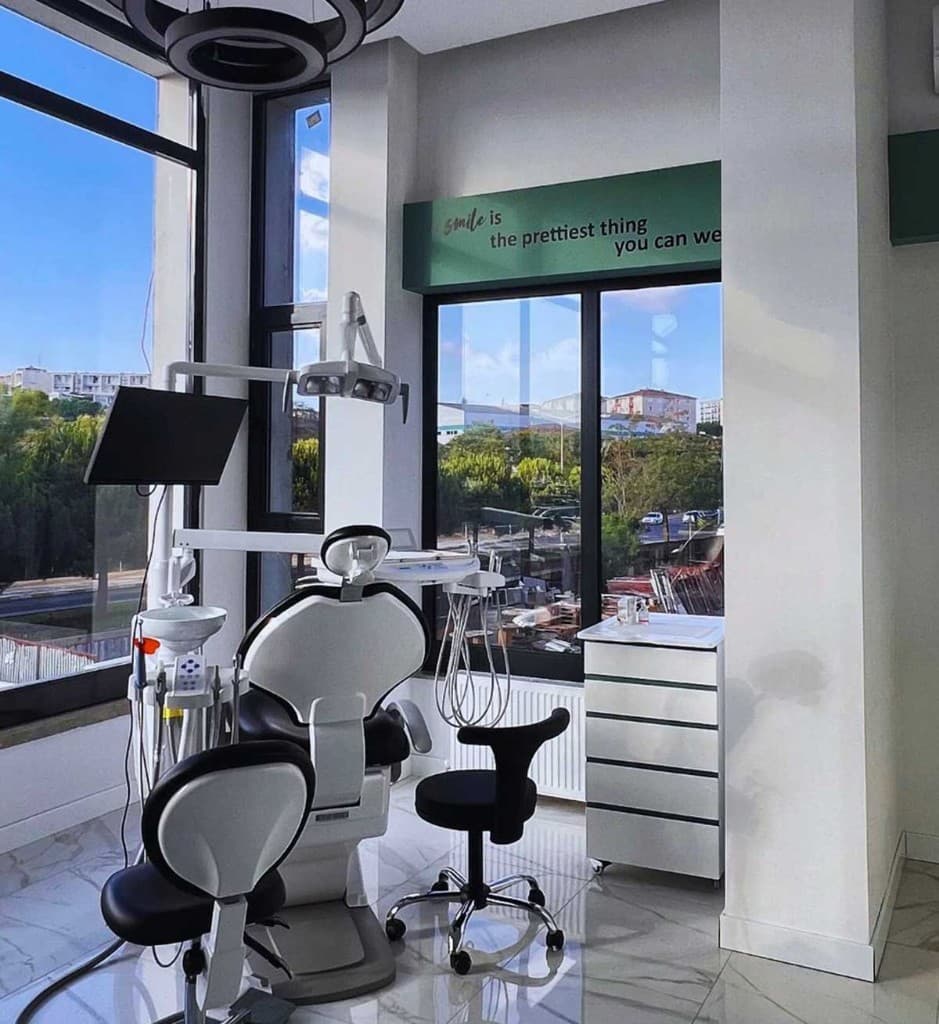
Digital technologies make treatment from diagnosis to restoration faster, more predictable, and more comfortable.

Digital Dentistry

Intraoral Scanners: The End of Uncomfortable Impressions

Conventional dental impressions — using trays filled with putty-like material inserted into the mouth — have been a source of discomfort and gag reflex for generations of dental patients. At DentARF, we use state-of-the-art intraoral scanners that capture a complete, highly detailed three-dimensional model of the teeth and gums in minutes, with no impression material required.

The scanner wand is passed smoothly over the dental arch, capturing thousands of images per second and assembling them in real time into a precise 3D model displayed on a chairside monitor. Patients can see their own teeth in three dimensions — an experience that also enhances understanding of clinical findings and proposed treatments.

Digital impressions offer significant advantages over conventional: they eliminate distortion from impression material setting, are immediately available for laboratory fabrication, can be electronically transmitted to the lab in seconds, and are stored permanently in the patient file for future reference. Studies show that digital impressions yield restorations with equal or superior marginal fit compared to conventional techniques.
CAD/CAM Restorations: Same-Day Crowns and Veneers

Computer-Aided Design / Computer-Aided Manufacturing (CAD/CAM) technology allows dental restorations to be designed digitally and milled from high-quality ceramic or composite blocks with robotic precision. At DentARF, CAD/CAM is used to fabricate crowns, onlays, inlays, veneers, and bridges from lithium disilicate (e.max), full-contour zirconia, and hybrid ceramic materials.

The workflow begins with a digital impression, which is processed through design software where the clinician or dental technician sculpts the restoration digitally, optimizing form, contacts, and occlusion. The design is then sent to the milling unit, which carves the restoration from a pre-fabricated ceramic block. After milling, the restoration is refined, characterized, polished, and glazed to achieve a natural, lifelike result.

For practices equipped with in-office milling units, the entire process — from preparation to final cementation — can be completed in a single appointment, eliminating the need for a temporary restoration and a second visit. For complex or full-arch cases, the digital workflow is sent to our trusted dental laboratory for fabrication with additional characterization by skilled technicians.

Cone-Beam CT and 3D Surgical Planning

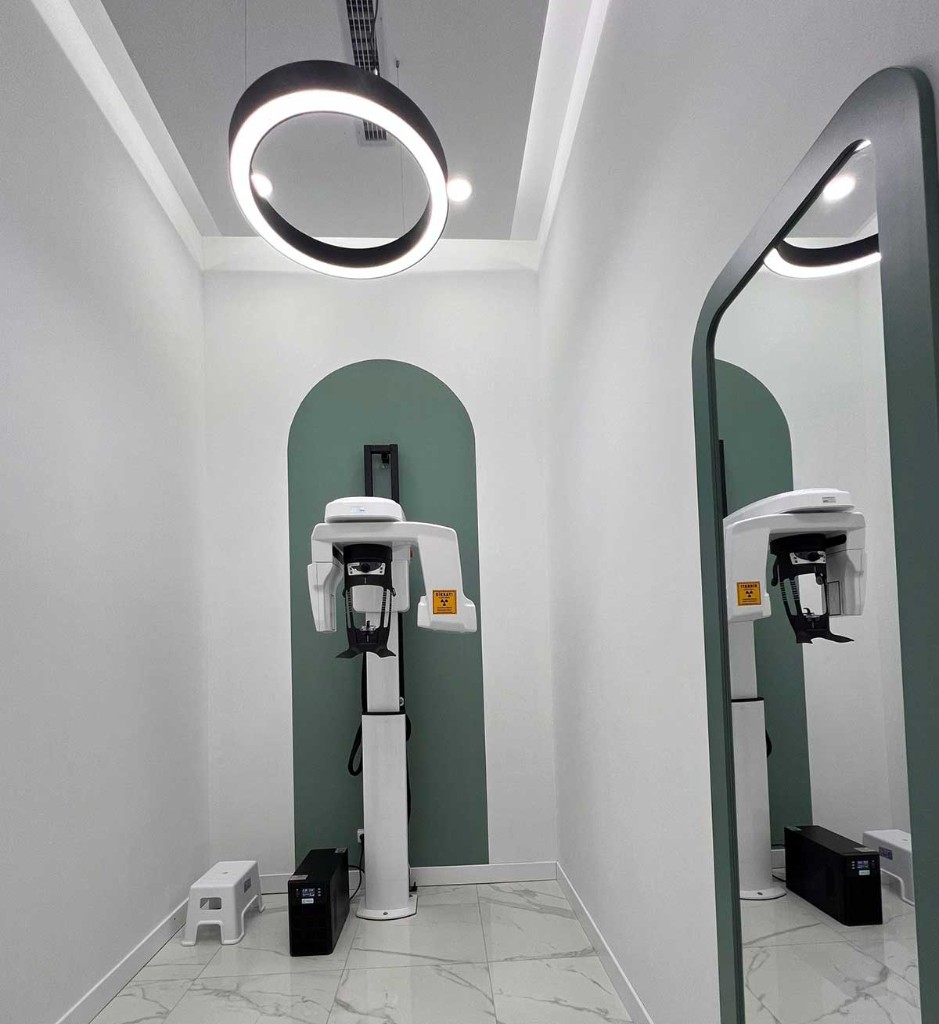
Cone-Beam Computed Tomography (CBCT) provides a three-dimensional X-ray view of the teeth, jaws, sinuses, nerve canals, and surrounding structures with far lower radiation exposure than medical CT scans. At DentARF, CBCT is used for implant planning, assessment of impacted teeth, endodontic evaluation, orthognathic surgery planning, and TMJ analysis.

Using CBCT data integrated with software such as implant planning programs, our surgeons can place virtual implants on the 3D model, assess bone quantity and quality, identify risk structures (inferior alveolar nerve, maxillary sinus, adjacent roots), and design 3D-printed surgical guides that transfer the virtual plan precisely to the patient during surgery — eliminating guesswork and maximizing implant positioning accuracy.

This guided surgery approach reduces surgical time, minimizes trauma to surrounding structures, and in many cases enables immediate loading protocols (teeth on implants the same day) that would not be predictable without precise 3D planning. Patients benefit from shorter procedures, faster recovery, and superior long-term outcomes.

Digital Anesthesia and Patient Comfort Technology

Fear of the injection is consistently cited as one of the top barriers to dental attendance. Computer-controlled local anesthetic delivery systems (such as The Wand / STA system) use a computer to regulate injection rate and pressure, delivering anesthetic at a slow, controlled rate that is significantly more comfortable than conventional syringe delivery. Most patients report feeling only a gentle sensation of pressure with no sharp pain.

Beyond anesthesia, digital dentistry at DentARF encompasses chairside monitors for patient education and real-time visualization, digital records management for complete, secure, and instantly accessible patient files, and digital communication tools that allow treatment plans, consent forms, and clinical images to be shared electronically with patients before, during, and after their appointments.

We are committed to continuous investment in technology that improves clinical outcomes and patient experience in equal measure. Every digital tool we adopt must demonstrably benefit our patients — through greater accuracy, enhanced comfort, shorter treatment time, or better long-term results.

DentARF Klinik

Take the First Step for a Healthier Smile Today

Use our online booking flow to create your appointment in 5 quick steps.

Book Appointment